Copyright Essentials from A to AI: A 2026 NISO Training Series
Scope
This training series is designed for anyone interested in where copyright law intersects with library and academic spaces and the tensions that shape those interactions. Each session pairs conceptual understanding with discussions of how power and market dynamics shape outcomes in practice.
The series opens with the foundations of the US copyright system and the critical framework that runs throughout the course — asking, for each topic, what is being protected, who benefits, who is excluded, and what assumptions the system makes. From there, sessions move through fair use and the public domain, statutory exceptions for libraries, and a structured mid-point session that uses cases from music, sports, and popular culture as a laboratory for applying that framework in small group discussion. With participants having put the analytical framework into practice, the second half of the series turns to the more complex institutional terrain of licensing and market power, open movements and author rights, and the unresolved questions surrounding copyright and AI.
The sessions will hold space for productive tension, collaborative discussion, and reflection on how we might navigate contradictory roles with integrity. The series concludes with a capstone session where participants will be able to work on designing or refining programs and practices for their own organizations which involve copyright concerns.
Course Agenda:
October 1: Foundations & Frameworks of Copyright
October 8: Fair Use and the Public Domain
October 15: Exceptions for Libraries
October 22: Copyright in Pop Culture and Digital Media
October 29: Licensing & Market Power
November 5: Open Movements & Author Rights
November 12: Copyright & AI: Guest Speakers
November 19: Practices and Programs in Your Organization
Training Facilitator
Willa Liburd, Legal Knowledge Management Consultant and Scholarly Communication Professional, Indiana University Bloomington
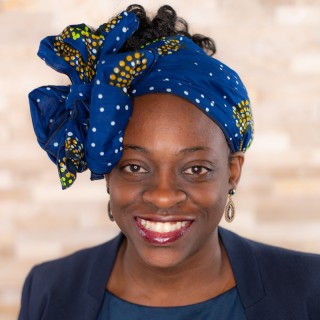
As Research Impact & Open Scholarship Librarian, Willa assists faculty and graduate students in managing their research profiles and tracking and demonstrating the impact of their scholarly work.
Her current research looks at equitable scholarly communication, specifically governance and sustainability, from the perspectives of both systems and labor. Willa is a member of the Association of College and Research Libraries Residency Interest Group (RIG), serving on its assessment team and subgroup on diversity residencies. She's also a board member of the Library Publishing Coalition and Secretary of NASIG (formerly the North American Serials Interest Group, Inc.). Previously, she has served on the NASIG Digital Preservation Committee and the Library Publishing Coalition's Diversity, Equity, and Inclusion Task Force.
Willa Liburd earned her MLIS from the School of Library and Information Science at the University of Iowa together with a graduate certificate in college teaching. She holds a Master of Laws from American University Washington College of Law, a Legal Education Certificate from Norman Manley Law School, and a Bachelor of Laws from the University of the West Indies at Cave Hill. Before joining IU, Willa worked as a student specialist at the University of Iowa conducting bibliographic analysis of open access funded research and assisting with the administration of the institutional repository.
Training Facilitator
Karen Stoll Farrell, Director, Scholarly Communication and Open Publishing Associate, Indiana University Bloomington
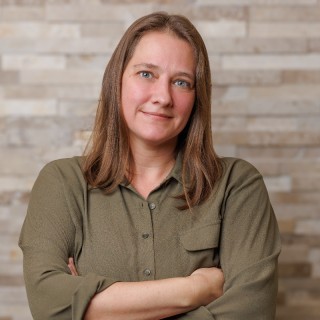
Karen Stoll Farrell's work is to support the IU community within the scholarly communication and publishing cycle. She guides the work of the department which includes journal and book publishing, Open Educational Resources, management of the institutional repository, research impact, and support for open access initiatives and collections. She also currently serves as the Director of the Dhar India Studies Program in the Hamilton Lugar School of Global and International Studies.
Stoll Farrell holds an M.A. (A.B.D.) in South Asian Studies from the University of Pennsylvania, an M.L.I.S. from Wayne State University, and a B.A. in Anthropology with minors in Religion and Women's Studies from Kalamazoo College. She began her work in libraries as the South and Southeast Asian Studies Librarian at IU Libraries in 2014. In 2016, she additionally became the head of the Area Studies Department in the Libraries. After a one-year term as interim head of the Scholars' Commons, Stoll Farrell took on the role of interim head of the Scholarly Communication Department in 2020, eventually becoming Director of Scholarly Communication and Open Publishing.
Stoll Farrell's research is primarily in the realm of disability and accessibility, scholarly publishing, and management. Her two most recent publications are:
- Stoll Farrell, K. (2025) Emergent Strategies to Build Transformative Library Teams. Library Leadership and Management, 39(1). https://doi.org/10.5860/llm.v39i1.7696
- Cohen, R., Cooke, P., Holt, M., Lounsberry, M., Roga, E., Squires, J., Stoll Farrell, K. (2025) Autistic librarians in the academic library hiring process. College & Research Libraries, 86(5). https://crl.acrl.org/index.php/crl/article/view/26933/34830
She has a co-edited volume coming in 2026: Cohen, R. & Stoll Farrell, K. (Eds.). (2026). Autistic Academic Librarians: A Guide for Success. Association of College and Research Libraries. [forthcoming]
Locally, Stoll Farrell was elected to serve as president of the Bloomington Library Faculty Council in 2019 and 2024. She currently serves as an elected member of BLFC. Nationally, she recently served as the project manager of the C4DISC Toolkit for Disability Equity project.
Stoll Farrell completed Copyright X Certification from Harvard Law School, and is a certified Scrum Product Owner. She has completed a number of management courses including ACRL's Libraries Management Skills Institute I and II and DeEtta Jones' Inclusive Manager's Toolkit.
Outside of IU, Stoll Farrell serves as a co-leader for a local Girl Scout troop and occasionally writes book reviews ("Review: Harmattan Season"; "Review: The Incandescent").
Course Duration and Dates
The series consists of eight (8) weekly segments, each lasting 90 minutes. Specific dates are:
- October 1, 8, 15, 22, 29
- November 5, 12, 19 (Note: Daylight savings will affect sessions after November 1)
Each session will be recorded and links to that archived recording will be disseminated to course registrants within 2 business days of the close of the specific session.
Event Sessions
Thursday, October 9, 2026, Session One: Foundations & Frameworks of Copyright
Speakers
Week 1 establishes the statutory and constitutional foundations of U.S. copyright law, focusing on core eligibility requirements like originality, fixation, and minimal creativity. Participants explore foundational doctrines to examine how the legal system balances creator rights with public benefit.
Shared Resources:
Copyright: Copyright 101 (From Cornell University Library Guides) – This is an introduction to the fundamentals of U.S. copyright law, including what copyright protects, who owns rights, and how those rights can be used or shared. It also introduces key concepts such as fair use and copyright exceptions to help users make informed decisions when working with copyrighted materials.
Circular 33: Works Not Protected by Copyright - The U.S. Copyright Office’s Circular 33, Works Not Protected by Copyright, explains types of content that generally fall outside copyright protection, including ideas, methods, names, titles, short phrases, typefaces, layouts, blank forms, and familiar symbols. It also provides examples and guidance on distinguishing copyrightable creative expression from elements that cannot be protected.
E-Resource Licensing Explained (From University of California, Berkeley Library Pressbooks): An A-Z Licensing Guidebook for Libraries by Rachael Samberg; Katie Zimmerman; Samantha Teremi; Erik Limpitlaw; and Sandra Enimil, and edited by Kaylyn Groves - Published by the Association of Research Libraries and written by library licensing experts, this guide is intended for librarians and library professionals who license electronic resources (e-Resources). E-resource license agreements can be challenging to understand, much less negotiate. This guide puts complex legal concepts and terms into understandable language for those librarians and library professionals without legal training.
Moral Rights in Canadian Copyright Law - This article describes the moral rights in Canadian copyright law. You’ll also find a comparison with moral rights provisions in the Berne Copyright Convention and U.S. copyright law.
17 U.S. Code § 102 - Subject matter of copyright: In general (From Cornell Law School's Legal Information Institute) - This section of the U.S. Copyright Code explains what types of works are eligible for copyright protection, including literary, musical, dramatic, artistic, audiovisual, sound recording, and architectural works. It also clarifies the distinction between copyrightable expression and ideas, processes, systems, methods, and other concepts that copyright does not protect.
Copyright Law of the United States (Title 17) and Related Laws Contained in Title 17 of the United States Code - This publication contains the text of Title 17 of the United States Code, including all amendments enacted by Congress through December 18, 2025. It includes the Copyright Act of 1976 and all subsequent amendments to copyright law; the Semiconductor Chip Protection Act of 1984, as amended; and the Vessel Hull Design Protection Act, as amended. The Copyright Office is responsible for registering intellectual property claims under all three.
Two Books with Surprising Similarities: Is It Blatant Copying or Taking Inspiration from a Fellow Author? (Published, June 2025 from 'The Lance', Student News Site of Linganore High School) by Addison Engle, Reporter - This article examines the similarities between Victoria Aveyard’s Red Queen and Lauren Roberts’ Powerless, exploring the debate over whether the parallels reflect literary inspiration or copying. It provides examples of similarities in the books’ settings, characters, plotlines, and major story developments while considering the broader question of originality in creative works.
Thursday, October 8, 2026, Session Two: Fair Use and the Public Domain
Week 2 starts with examining the theories of copyright so participants can understand the underlying philosophies and therefore the motivations animating different copyright systems, including US copyright law. The lesson then moves on to core legal doctrines that permit the lawful reuse of copyrighted works without prior authorization, looking at copyright duration and the public domain, as well as the four-factor fair use framework.
Shared Resources:
Copyright: Copyright Term and the Public Domain (From Cornell University Library Guides) – This section of the guide explains public domain works, including what public domain means and how works may enter the public domain when copyright protection expires or does not apply. It also provides guidance for understanding when a work can generally be used without obtaining permission from a copyright holder.
University of Pennsylvania: Catalog of Copyright Entries - The Catalog of Copyright Entries provides access to historical U.S. copyright registration and renewal records, with records organized by year and type of work. It can be used to research whether a work was registered or had its copyright renewed, identify copyright owners, and help assess whether older works may have entered the public domain.
ARL Code of Best Practices in Fair Use for Academic and Research Libraries - This resource provides practical, community-developed guidance on applying fair use in common academic and research library settings. It addresses situations such as providing course materials, digitizing and preserving collections, creating digital collections, supporting accessibility, conducting non-consumptive research, and collecting web content.
Search Copyright Records: Copyright Public Records Portal - Your starting point for finding copyright records held by the Copyright Office. Here, you can search our online records, learn about our searching and retrieval services, and view educational videos and materials.
Stanford University Libraries Copyright Renewals Database - A searchable index of the copyright renewal records for books published in the US between 1923 and 1963. Note that the database includes only renewal records, not original registrations, and only Class A (book) renewals received by the US Copyright Office between 1950 and 1992.
Meta Wins on Fair Use for Now, but Court Leaves Door Open for “Market Dilution” - This Authors Alliance analysis examines the June 2025 Kadrey v. Meta ruling, in which a federal court found Meta’s use of copyrighted books to train its AI models to be fair use while raising questions about potential “market dilution.” The analysis provides context on the court’s reasoning and the issues surrounding the use of copyrighted works to train AI models.
Digital Commons@University of Nebraska–Lincoln - This institutional repository provides free access to scholarly works by University of Nebraska–Lincoln faculty, staff, and students. It offers a useful example of how academic institutions can make research openly available while addressing copyright and authors’ rights.
Thursday, October 15, 2026, Session Three: Exceptions for Libraries
Week 3 examines specialized statutory exemptions designed specifically for educational, research, and cultural memory institutions. The session covers legal provisions under Section 108 that enable libraries and archives to preserve, reproduce, and distribute materials to support scholarship and public access.
Thursday, October 22, 2026, Session Four: Copyright in Pop Culture and Digital Media
Week 4 investigates how traditional intellectual property principles adapt to modern media, digital networks, diasporic networks, and popular culture. Participants explore real-world intellectual property issues across media and entertainment through a "Top 10 Countdown" of case studies.
Thursday, October 29, 2026, Session Five: Licensing & Market Power
Week 5 explores how agency plays a key role in whether creators can effectively manage, monetize, and permit reuse of their creative works. Participants examine the mechanics of permissions, traditional publishing contracts, and other contractual arrangements.
Thursday, November 5, 2026, Session Six: Open Movements & Author Rights
Week 6 covers alternative publishing paradigms and rights-retention strategies that empower creators to share their scholarship openly. The session will highlight Open Access models, Creative Commons licensing frameworks, and practical approaches for navigating academic publishing contracts.
Thursday, November 12, 2025, Session Seven: Copyright & AI: Guest Speakers
Week 7 features guest experts discussing legal and policy developments, and emerging topics at the intersection of copyright law and artificial intelligence.
Thursday, November 19, 2026, Session Eight: Practices and Programs in Your Organization
The final week bridges legal theory and institutional application within participants' own operational environments. Attendees focus on crafting elements for a practical copyright policy at their institution.
Additional Information
Registration is non-transferable, and login via this Zoom link is exclusively accessible to the registered individual. As registrants, you can expect to receive a message containing your attendee sign-on credentials three business days prior to the scheduled Thursday session.
If you have not received your instructions by the day before an event, please contact NISO headquarters for assistance via email (nisohq@niso.org).
Registrants for an event may cancel participation and receive a refund (less $30.00) if the notice of cancellation is received at NISO HQ (nisohq@niso.org) one full week prior to the event date. If received less than 7 days before, no refund will be provided.
All events follow the NISO Code of Conduct. More information can be found here.
Broadcast Platform
NISO uses the Zoom platform for purposes of broadcasting our live events. Zoom provides apps for a variety of computing devices (tablets, laptops, etc.) To view the broadcast, you will need a device that supports the Zoom app. Attendees may also choose to listen just to audio on their phones. Sign-on credentials include the necessary dial-in numbers, if that is your preference. Once notified of their availability, recordings may be viewed from the Zoom platform.